



What Tools and Products Do Professional Tile Cleaning Services Use?
Professional tile cleaning services utilize industrial-grade equipment and specialized chemical solutions that far surpass the capabilities of standard household tools. Key equipment includes high-pressure extraction systems, often truck-mounted, that combine heat, intense pressure, and vacuum suction to eliminate deep-seated grime. Alongside these machines, technicians employ rotary floor scrubbers, specialized grout brushes, and pH-balanced cleaning agents tailored for ceramic, porcelain, or natural stone surfaces.
The effectiveness of a professional service stems from the precise combination of heat, mechanical agitation, and chemical dwell time. While a traditional mop often just redistributes surface dirt, professional-grade extractors pull pressurized water and contaminants directly out of porous grout lines and textured tile surfaces. This article details the specific inventory found in a professional cleaning van and explains how these tools provide a level of cleanliness that manual scrubbing simply cannot achieve.
Heavy Duty Extraction Equipment
The most significant piece of equipment is the high-pressure extraction unit. Many professionals utilize truck-mounted systems that generate their own power and heat. These units can heat water to temperatures exceeding 200 degrees Fahrenheit, which is essential for breaking down stubborn oils and grease. The pressure settings typically range between 800 and 1,200 PSI for tile—a significantly higher force than what is used for carpet cleaning.
Portable extractors are employed when a truck-mounted unit cannot reach the area, such as in high-rise buildings or deep inside large commercial complexes. Although smaller, these high-end portable units still offer significant vacuum lift and pressure capabilities. According to a market analysis by Grand View Research, the demand for professional cleaning services continues to grow as property owners seek to maintain the longevity of hard surfaces through specialized equipment.
Rotary Scrubbers and Surface Tools
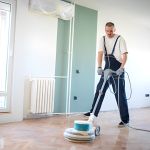
To agitate cleaning solutions and break the bond between soil and the floor, professionals use rotary floor machines. These tools feature spinning brushes or specialized pads that move at high speeds to scrub the tile and grout surfaces thoroughly.
One common tool is the “spinner” or hard surface wand. This tool features a circular head with internal spray jets that rotate rapidly. The head is shrouded by a vacuum ring that immediately recovers the water as it hits the floor. This design prevents splashing and ensures the floor is nearly dry by the time the technician moves to the next section.
Bonus Tip: Professional technicians use the rotary tool’s extraction power to verify “rinseability.” By checking for soapy residue after the initial pass, they determine if the mechanical agitation successfully suspended the soil or if a second neutral rinse is required to ensure no chemical film remains.
Professional Grade Cleaning Solutions
The chemistry used by professionals is far more complex than the all-purpose cleaners found in grocery stores. Technicians select products based on the specific type of soil and the material composition of the floor.
- Alkaline Cleaners: These are the primary workhorses of the industry. They are highly effective at breaking down fats, oils, and general organic greases, making them ideal for kitchens and high-traffic living areas.
- Acidic Cleaners: These are used selectively to remove mineral deposits, hard water stains, and efflorescence. They are also effective for “opening up” grout pores before sealing, though they must be used carefully to avoid etching natural stone.
- Neutral Cleaners: Used primarily for sensitive natural stone like marble or travertine, these cleaners maintain a pH of 7.0 and will not damage delicate surfaces.
- Grout Whiteners and Brighteners: Specific oxygenated agents may be applied to grout lines that have become severely discolored or stained over time.
Comparison of Equipment Performance
The following table compares standard residential cleaning methods with the high-performance professional equipment used by industry leaders like All Points Cleaning and Restoration.
Comparison of Mop and Extraction Units
| Feature | Standard Home Mop | Consumer Steam Mop | Professional Extraction Unit |
|---|---|---|---|
| Water Temperature | 70-100°F | 180-210°F | 200-230°F |
| Pressure (PSI) | 0 | 15-50 | 800-1,200 |
| Soil Removal | Moving dirt around | Limited surface lift | Total extraction through vacuum |
| Grout Penetration | Minimal | Surface only | Deep pore cleaning |
| Drying Time | 30-60 Minutes | 10-20 Minutes | 5-10 Minutes |
Specialized Hand Tools for Detail Work
While large machines perform the bulk of the cleaning, detail tools ensure that corners and edges are equally pristine. Professionals use narrow grout brushes with stiff nylon or brass bristles to scrub tight corners where rotary machines cannot reach.
Coved baseboards and vertical tile surfaces, such as those in showers, require handheld pressure tools. These smaller wands operate on the same principle as the larger floor tools but are designed for better ergonomics on vertical planes. A technical guide from Cleanfax suggests that the use of specialized edge tools is what separates a high-quality professional result from a mediocre one.
Protective Products and Sealants
Once the tile and grout are clean, the final step involves protection. Grout is essentially a mixture of sand and cement, making it highly porous and prone to absorbing liquids and stains.
- Penetrating Sealers: These soak into the grout and stone pores, creating a barrier that repels water and oil-based stains without altering the appearance of the floor.
- Topical Sealers: These create a protective film on the surface, often adding a gloss or sheen. These are less common for grout but are frequently used on saltillo or slate.
- Color Sealant: This is a specialized epoxy-based coating that covers the grout. It not only seals the pores but also restores a uniform color to grout lines that are permanently stained.
Bonus Tip: To check if a sealant is still effective, drop a small amount of water on the grout line. If it beads up, the sealer is intact; if it soaks in and darkens the grout, it is time for a professional re-application.
Things to Consider Before Making a Decision
Before hiring a service or choosing a cleaning method, evaluate the following factors:
- Tile Type: Natural stone, like marble or limestone, requires different chemicals than ceramic or porcelain. Using the wrong product can cause permanent etching or surface dullness.
- Grout Condition: If grout is crumbling or missing, high-pressure cleaning might worsen the damage. Structural repairs should be completed prior to deep cleaning.
- Previous Treatments: If a wax or “mop and glow” product has been applied, a professional will need to use a stripper to remove that buildup before cleaning the actual tile.
- Safety Data: Ask about the VOC (Volatile Organic Compound) levels in the cleaning agents, especially if pets or children are present. Many professionals now use eco-friendly or low-toxicity solutions.
Common Questions About Professional Tools
Many homeowners wonder why they cannot achieve the same results with a rented machine from a hardware store. The difference lies primarily in the vacuum lift and the heat. A rental machine lacks the power to pull water from the bottom of the grout pores, often leaving the floor excessively wet, which can lead to mold growth or rapid re-soiling.
Another common question involves the safety of high pressure on older tile. Professional tools allow the technician to adjust the PSI settings. For older installations, a technician might reduce the pressure to 400 or 500 PSI to ensure the integrity of the grout remains undisturbed.
According to a study published by the IICRC, professional cleaning standards emphasize that the “suspension” of soils through chemistry must be followed by thorough “extraction” to be considered a true clean. This is why professional tools always include a powerful vacuum component.
Frequent Inquiries Regarding Tile Care
How often should professional tools be used on residential floors?
Most high-traffic residential floors benefit from professional cleaning every 12 to 18 months. This frequency prevents permanent staining of grout and removes the microscopic scratches that can dull the tile finish over time.
Can professional tools remove mold from shower grout?
Yes, the combination of high-heat steam and specialized antimicrobial cleaners used by professionals can effectively kill and remove mold spores. However, if mold has grown behind the tile into the substrate, surface cleaning will only provide a temporary solution.
Does the cleaning process create a mess in the house?
Professional tools are designed to be self-contained. The vacuum shroud on the rotary tool prevents water from spraying on walls or furniture. Dirty water is pumped directly into a waste tank on the truck or into a portable unit, leaving no mess behind.
Is it necessary to seal the grout after using these tools?
It is highly recommended. The high-pressure cleaning process removes old sealants along with the dirt. Leaving the grout unprotected after a deep clean makes it highly susceptible to immediate staining from the next spill.
Final Thoughts on Professional Tile Maintenance
Professional tile cleaning is a technical process that relies on specialized hardware and advanced chemistry. By utilizing high-pressure extraction, rotary agitation, and pH-specific solutions, these services remove contaminants that standard household cleaning leaves behind. Proper maintenance involves understanding the relationship between heat, pressure, and chemical dwell time. To keep floors in peak condition, homeowners should evaluate the porosity of their surfaces and ensure that protective sealants are reapplied following any deep cleaning process. This proactive approach ensures the floor remains aesthetic and hygienic for years to come.
Professional Cleaning Guidance
Maintaining the appearance and hygiene of a home requires the right approach to hard surface care. All Points Cleaning and Restoration provides the expertise needed to handle complex cleaning tasks for all varieties of tile and stone. For those seeking detailed information or professional assistance with floor maintenance, contact Martin at All Points Cleaning and Restoration by calling (310) 872-0453 or via email at martin@allpointscarpetcare.com to discuss specific needs and floor conditions.
Sources
- Grand View Research – Detailed market analysis on the growth and trends of the cleaning product and service industry.
- Cleanfax – A leading industry resource providing technical guides and best practices for professional floor care technicians.
- IICRC – The Institute of Inspection, Cleaning, and Restoration Certification, which sets the global standards for professional cleaning and restoration.


Leave a Reply